Quick answer
Start with your exact destination, not a bus number. A Seoul airport limousine is convenient when its stop is close to your hotel; an Incheon or Gyeonggi bus serves destinations outside central Seoul; an intercity bus connects the airport with other regions. Late-night buses are separate limited services, while the free airport shuttle is only for moving within the airport area.
Chapter 1
Which Incheon Airport Bus Do You Need?
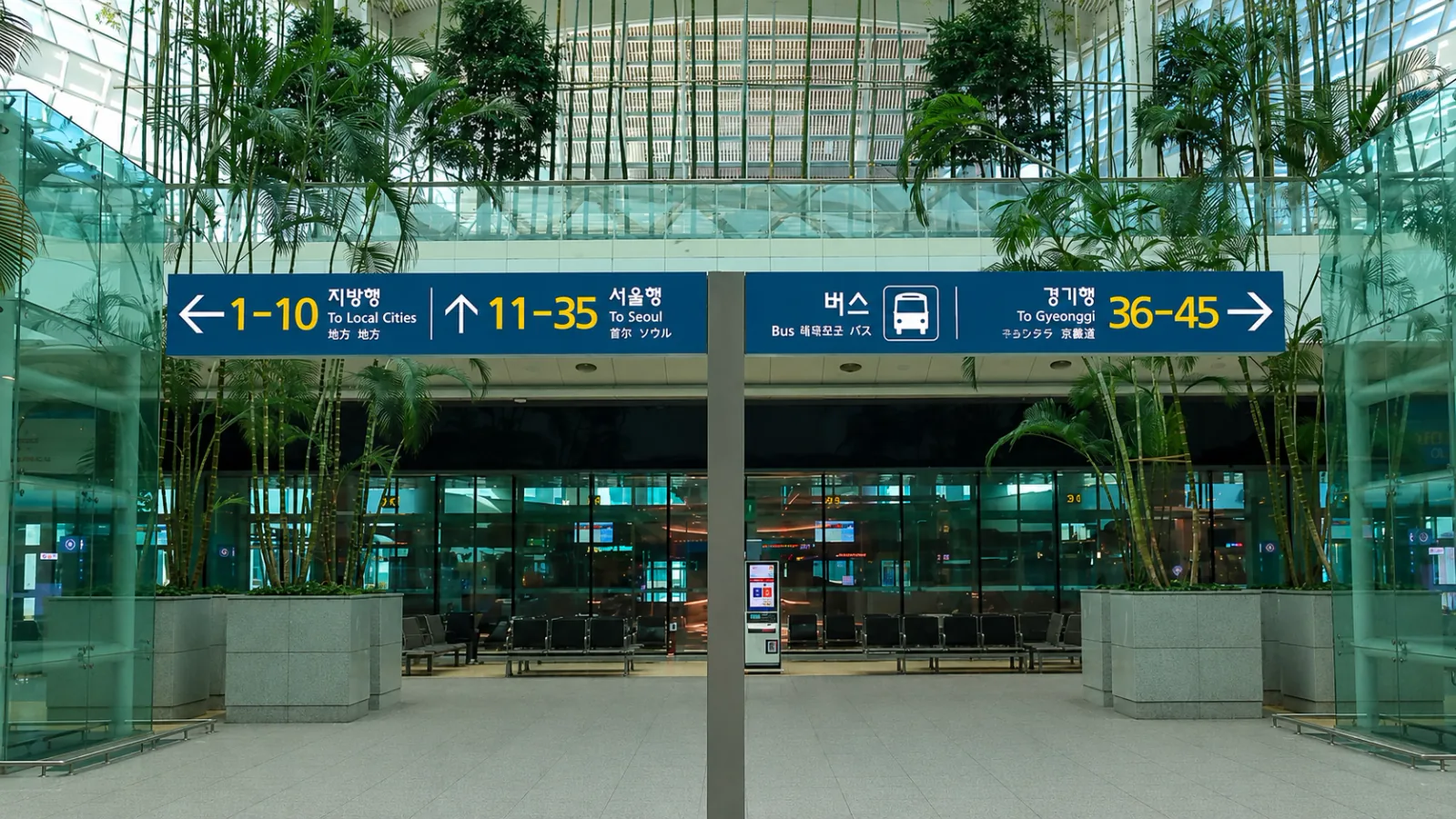
“Airport bus” is a broad label at Incheon Airport. The buses do not all use the same network, operator, ticket rules or destination area. First decide which category matches your trip, then check the live route, terminal and boarding information for that specific service.
1. Seoul airport limousine or airport bus
Choose this category when your destination is in Seoul and a listed stop is reasonably close to your accommodation. These buses typically place luggage in a compartment below the passenger cabin, so they can be comfortable after a long flight. The main advantage is fewer transfers: you may be able to ride from the terminal to a hotel district without carrying a suitcase through stations.
A district name alone is not enough. Myeongdong, Jongno, Dongdaemun, Gangnam and Hongdae cover large areas, and two hotels described as being in the same district may have very different access to a bus stop. Compare the final walking route, slope, major intersections and road crossings before choosing the bus.
2. Incheon and Gyeonggi buses
Use this category for destinations in Incheon city or Gyeonggi Province. These services are not simply extensions of the Seoul airport limousine network. Operators, stopping patterns, ticket methods and boarding arrangements can differ by route. Search the exact city, district or transport hub and confirm that the bus travels in the correct direction.
Gyeonggi Bus Information
Check route numbers, operators and service information for airport buses serving Gyeonggi-do.
This source does not cover every Seoul or intercity airport bus.
3. Intercity buses
Intercity buses connect Incheon Airport with cities and terminals outside the Seoul metropolitan area. They are relevant when you are traveling directly to another region rather than staying in Seoul first. Search by the city and the specific intercity or express bus terminal, because a city can have more than one terminal.
BusTago Intercity Bus Booking
Check intercity bus routes, terminal information and available booking options for destinations outside the Seoul area.
Not every route or terminal supports online booking. If online booking is unavailable, check the airport ticket counter, the departure terminal or the route operator.
4. Late-night buses
Late-night buses are limited services for arrivals after normal daytime options become difficult. Seoul late-night buses and Gyeonggi late-night buses are separate, and the routes shown for Terminal 1 may differ from those for Terminal 2. Do not assume a late-night bus stops near your daytime route or hotel.
Before relying on one, compare the scheduled arrival of your flight with immigration, baggage claim and customs time. Then check the official page for your terminal and destination area. If the last suitable service leaves too soon or ends far from your accommodation, an official airport taxi or a pre-booked transfer may be the safer plan.
5. Free airport shuttle bus
The free airport shuttle is for movement between airport terminals and airport-area facilities such as long-term parking. It is not a free bus to Seoul, Gyeonggi or another city. Follow airport signs for the correct shuttle stop and confirm that the shuttle serves the airport facility you need.
Choose by the final stop, not by the vehicle name
- Hotel close to a listed Seoul stop: a Seoul airport limousine may minimize luggage handling.
- Destination close to Seoul Station or an easy rail connection: AREX may be more predictable.
- Family, group or several large bags: compare a bus with an official taxi or pre-booked pickup.
- Destination outside Seoul: search the Incheon, Gyeonggi or intercity category directly.
- Late arrival: verify a terminal-specific night route and keep a backup before boarding closes.
| Option | Often suits | Luggage and transfers | Traffic or late-night issue | Check before choosing |
|---|---|---|---|---|
| Airport bus | Hotels near a listed stop; regional destinations | Usually fewer transfers, with operator-specific baggage rules | Road traffic affects arrival time; late service is limited | Exact stop, operator, terminal, last useful departure and final walk |
| AREX | Seoul Station and rail-connected areas | You handle bags and may need a subway or taxi transfer | Not affected by road traffic; operating hours still matter | Train type, last connection, station accessibility and hotel transfer |
| Taxi | Door-to-door trips, late arrivals and small groups | Minimal transfers, but vehicle capacity matters | Traffic and time-based surcharges may affect the trip | Official taxi stand, destination in Korean and suitable vehicle size |
| Pre-booked transfer | Groups, children, special luggage or planned pickup | Driver meeting and vehicle size can be arranged in advance | Flight-delay and waiting policies differ by provider | Meeting point, included waiting time, cancellation terms and vehicle capacity |
Chapter 2
How to Find the Right Route and Stop
A correct route search starts before you reach the ticket counter. Save your accommodation’s Korean address, English address and phone number. Pin the entrance on a Korean map rather than relying only on a booking-site neighborhood label; this gives you a precise destination to compare with official bus stops.
- Confirm the exact address. Check the Korean road address and place name. If you are staying in an apartment or guesthouse, identify a nearby major hotel, station or landmark as a second reference.
- Find the nearest practical stop. The geographically closest stop is not always easiest with luggage. Review walking distance, hills, wide roads, underpasses and whether a taxi is needed after the bus.
- Search the official airport bus tool. Use the destination or route search on the Incheon Airport English website. Look under the correct area: Seoul, Incheon, Gyeonggi or another region.
- Identify the service category. Decide whether the result is a Seoul airport limousine, an Incheon or Gyeonggi service, an intercity route or a late-night bus.
- Identify the operator. The operator’s official page is the best place to confirm its current timetable, fare, ticket method and luggage policy.
- Check your arrival terminal. Confirm whether your flight arrives at T1 or T2, then use the terminal-specific boarding information. A route can use different bays or sequences at the two terminals.
- Match the direction and destination. Do not rely on the bus number alone. Read the destination, direction and stop list together, especially where similar route names exist.
- Compare timing with your real arrival. Allow time for immigration, baggage claim and customs. If the last useful bus is close to your estimated public-hall arrival time, prepare a second option.
Check the last walk before you commit
A direct bus can still be inconvenient if it leaves you across a major road, at the bottom of a hill or several blocks from the hotel entrance. Use the Korean maps guide to inspect the walking route. For Myeongdong, Jongno, Dongdaemun, Gangnam and Hongdae, compare the actual hotel pin with each candidate stop rather than choosing by district name.
Check before travel
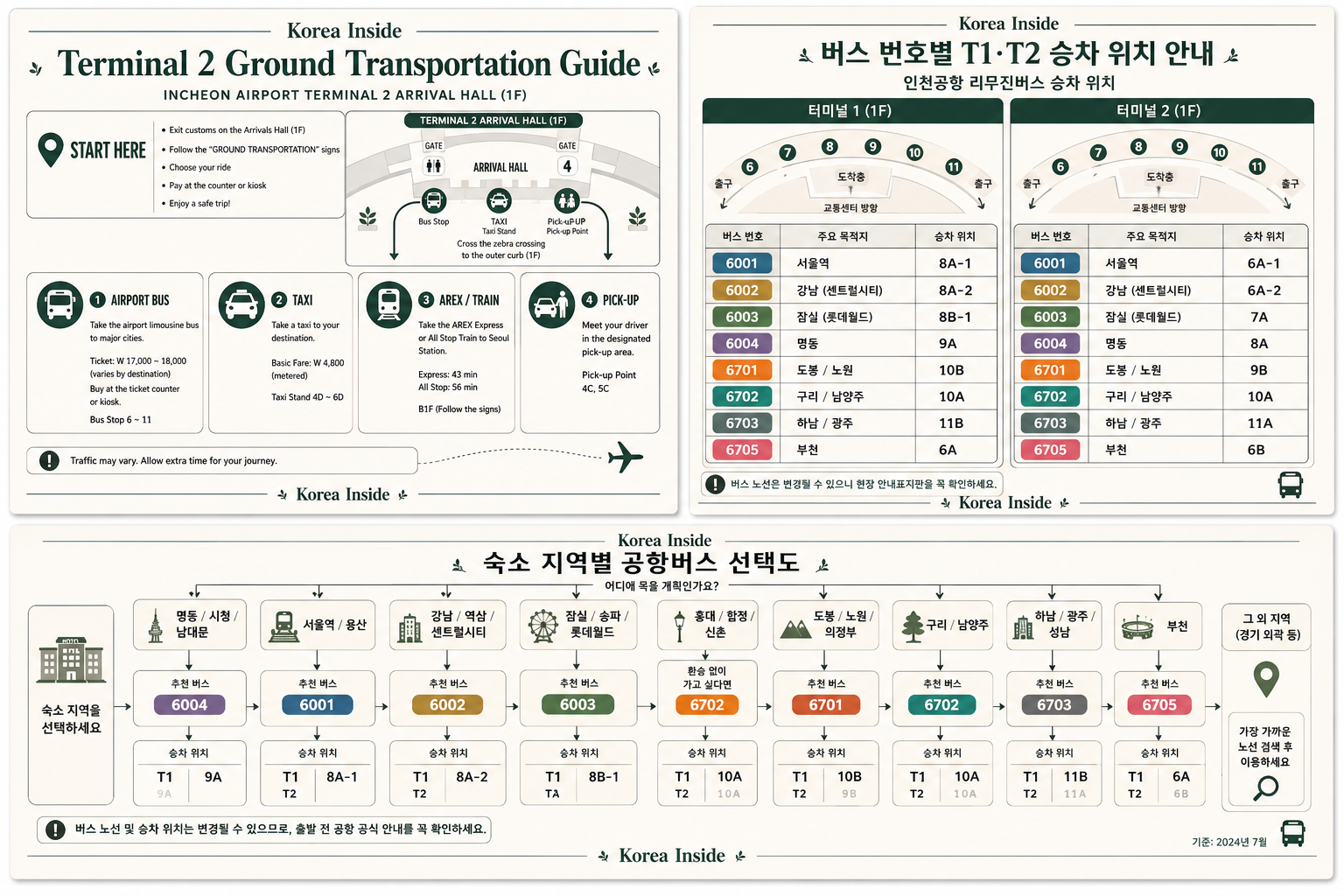
Bus routes and boarding locations may change. Confirm the latest information on the official airport or bus operator website before travel.
Official Seoul Airport Bus Operators
Seoul airport buses are operated by several companies. Routes, tickets, payment methods and luggage rules can differ by operator. First find your route, then check the website of the company operating it.
CALT City Airport Limousine
Official routes, stops and timetable information for CALT services.
Check CALT routes and timetablesAirport Limousine Co.
Official routes, timetables, fares, boarding locations, ticket offices and operator-specific guidance.
Check Airport Limousine Co. servicesSeoul Airport Limousine
Official route and service information for Seoul Airport Limousine.
Korean-language website
Check Seoul Airport Limousine routesK Airport Limousine
Official stop search, routes, timetables, fares, real-time information and ticket guidance.
Check K Airport Limousine servicesOperator rules
These operators do not use one universal ticketing, payment or luggage policy. Check the rules for your specific operator and route.
Chapter 3
Tickets and Boarding at Terminal 1 and Terminal 2
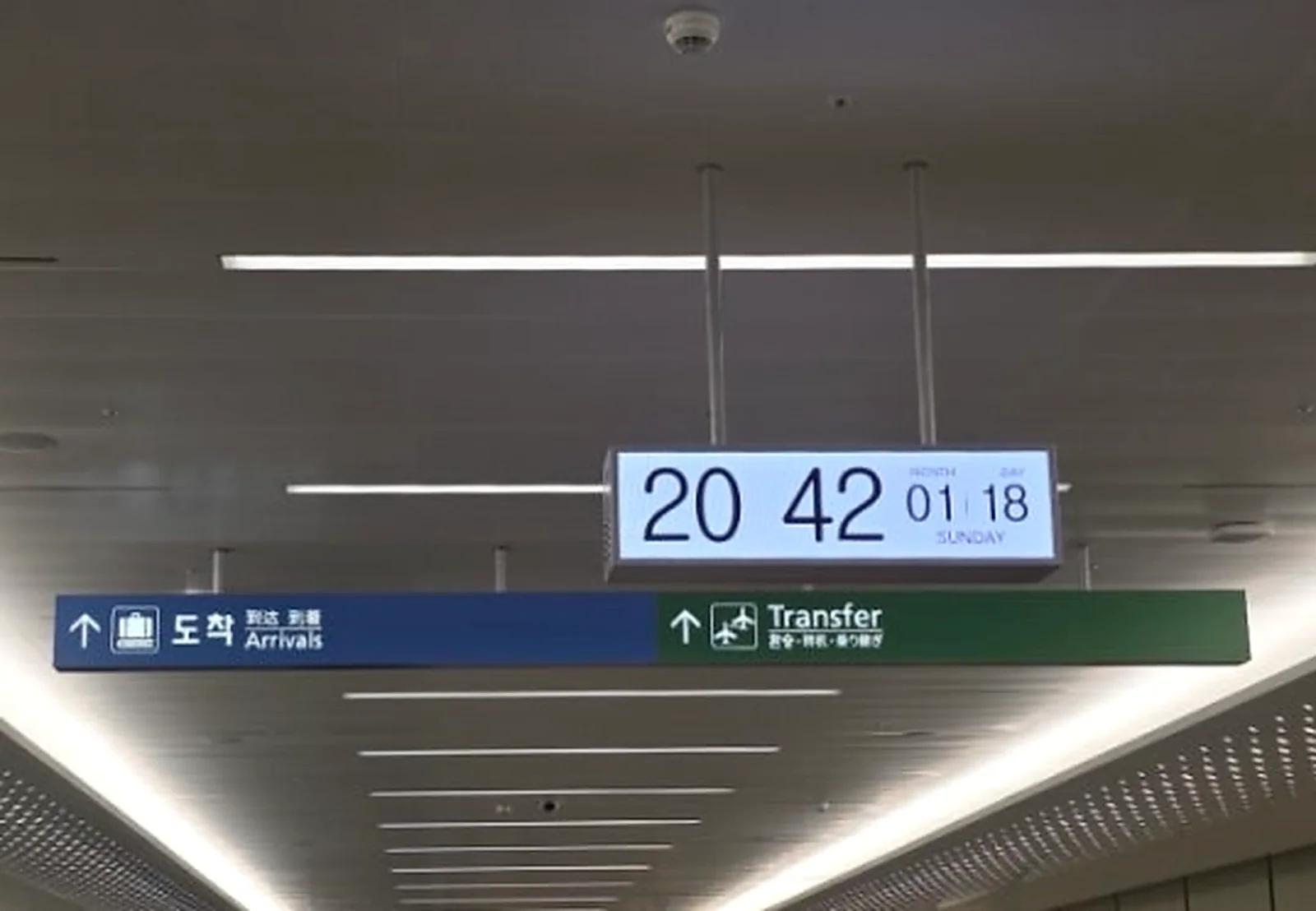
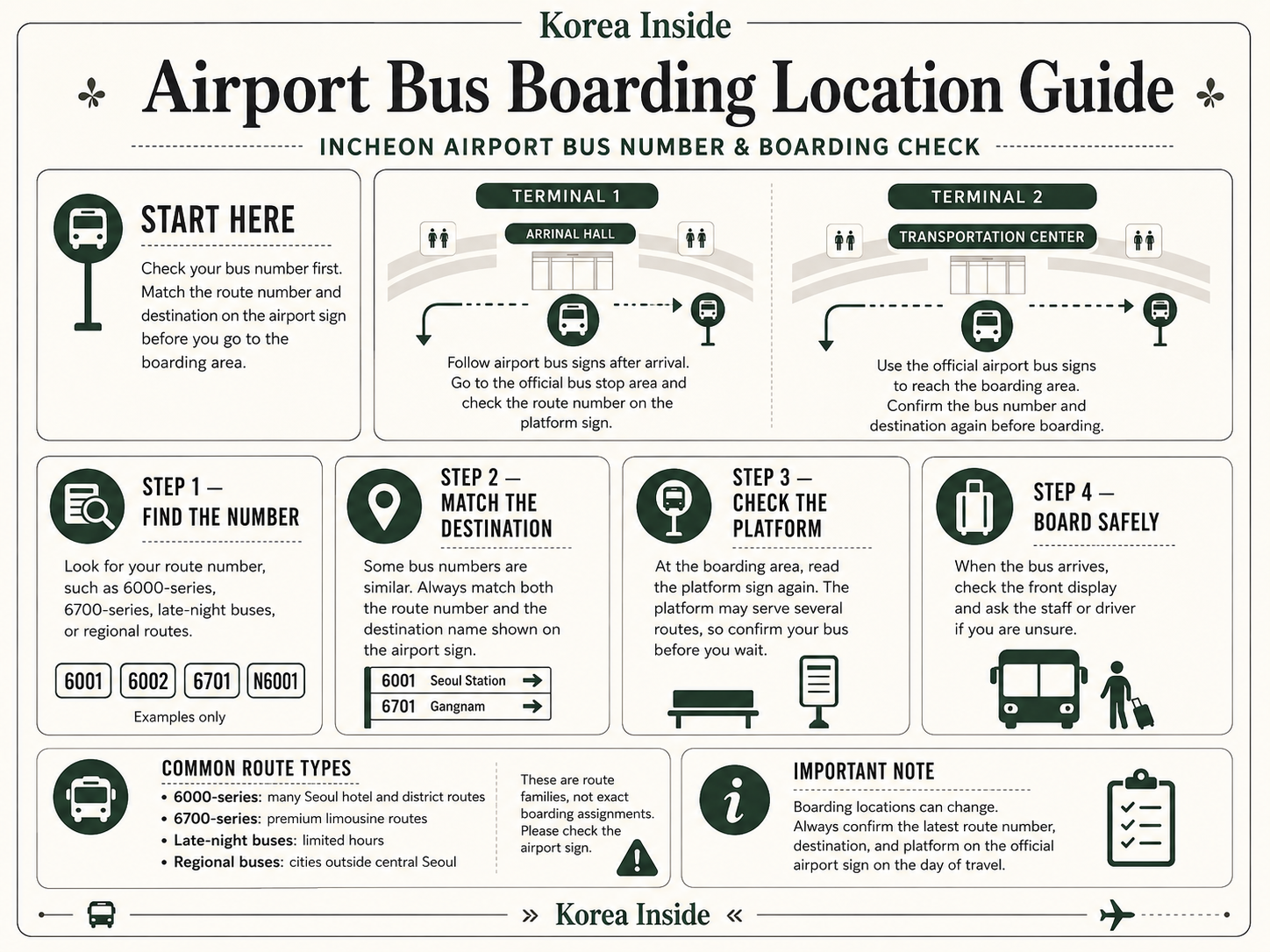
After immigration, baggage claim and customs, enter the public arrival hall and pause before following the first bus sign you see. Confirm your destination, service category and terminal, then locate the official ticket or information point for that route. The exact counter, machine, bay and sales method can change, so use airport signs and live official information on the day.
Arrival-to-seat sequence
- Enter the public arrival hall. Finish all arrival procedures and keep your passport, phone and destination details accessible.
- Confirm the destination and bus type. Recheck the exact stop, direction and operator rather than asking only for “the bus to Seoul.”
- Find the correct ticket point or machine. Follow official airport signs. Ask airport information staff if the route or operator is unclear.
- Check the ticket details. Confirm the bus number or service name, destination stop, departure terminal and boarding bay before paying.
- Go to the displayed boarding bay. Leave enough time to find the bay, but continue checking the electronic display or sign for changes.
- Confirm the bus before loading luggage. Show the ticket or destination to staff and check the direction on the vehicle.
- Keep the luggage claim tag. If staff place a bag below the bus, retain the matching tag until you collect the bag.
- Monitor your stop. Follow onboard displays or announcements and keep your map open. If unsure, ask the driver or another staff member early.
Terminal 1
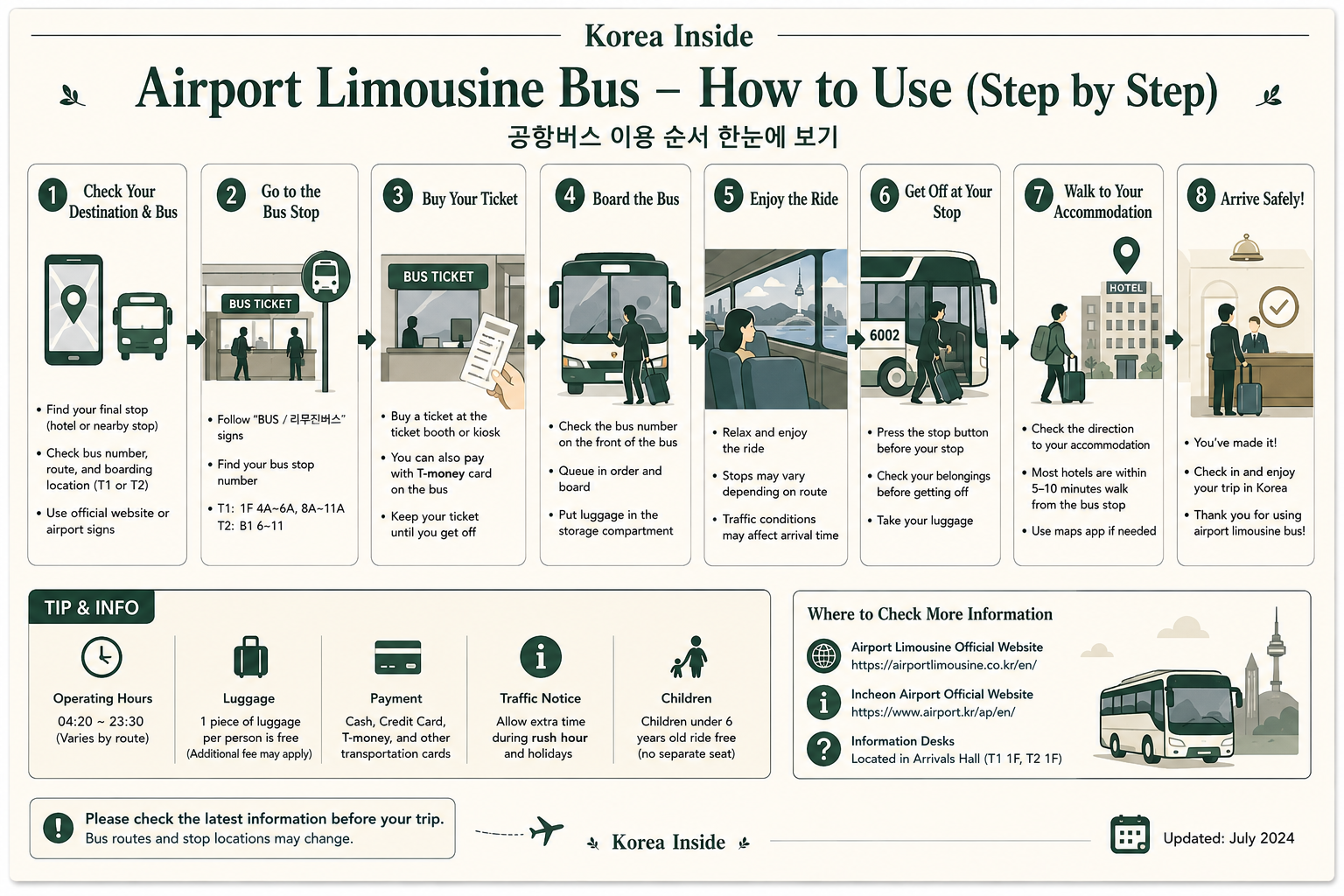
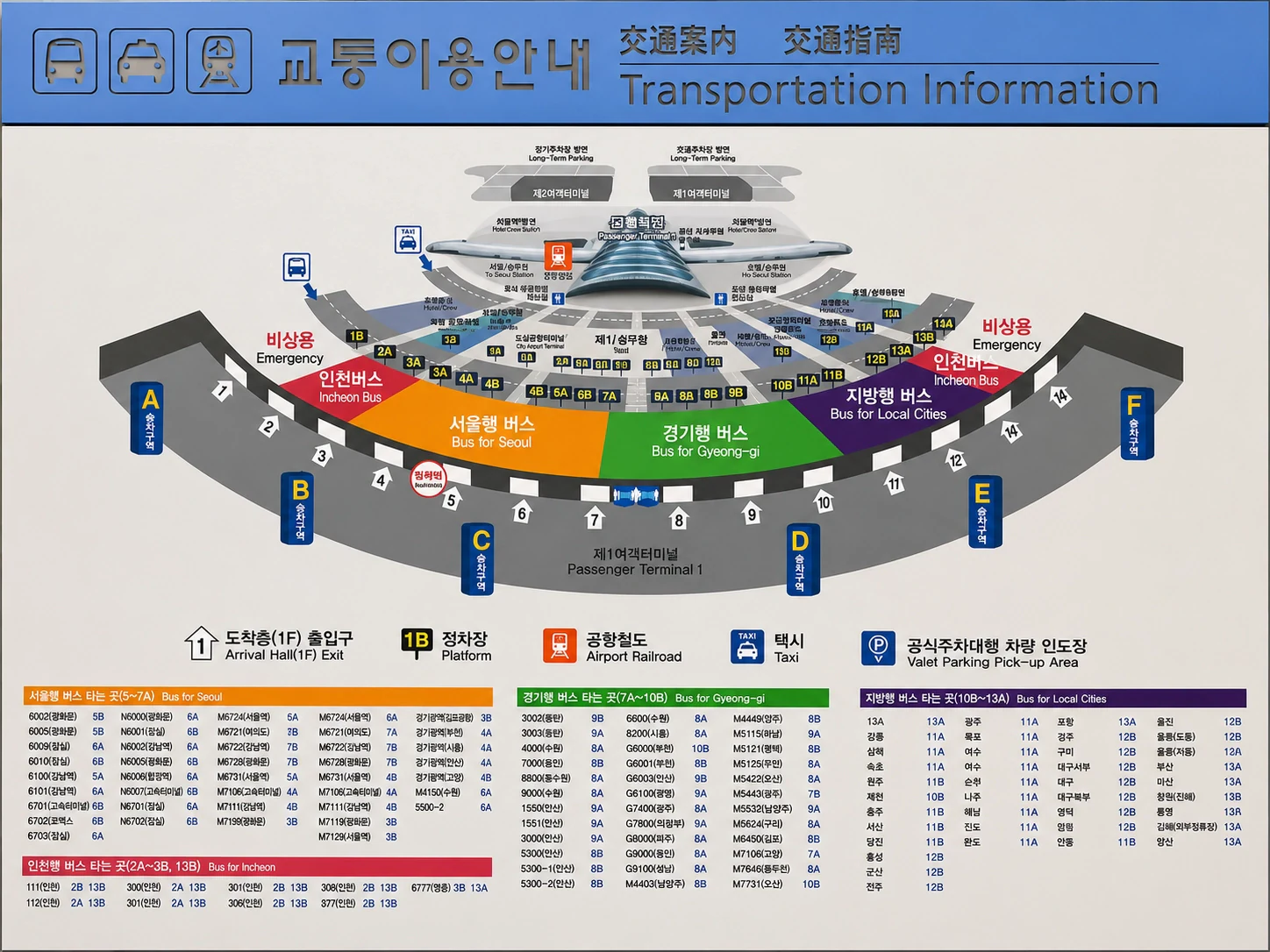
At Terminal 1, official bus information and ticket facilities are associated with the arrivals level and the outside bus area. Follow the airport’s bus and ticket signs after entering the public hall. Confirm the current ticket location and boarding bay on the official T1 public bus page or with airport staff; do not depend on an old blog screenshot or a saved bay number.
Terminal 2
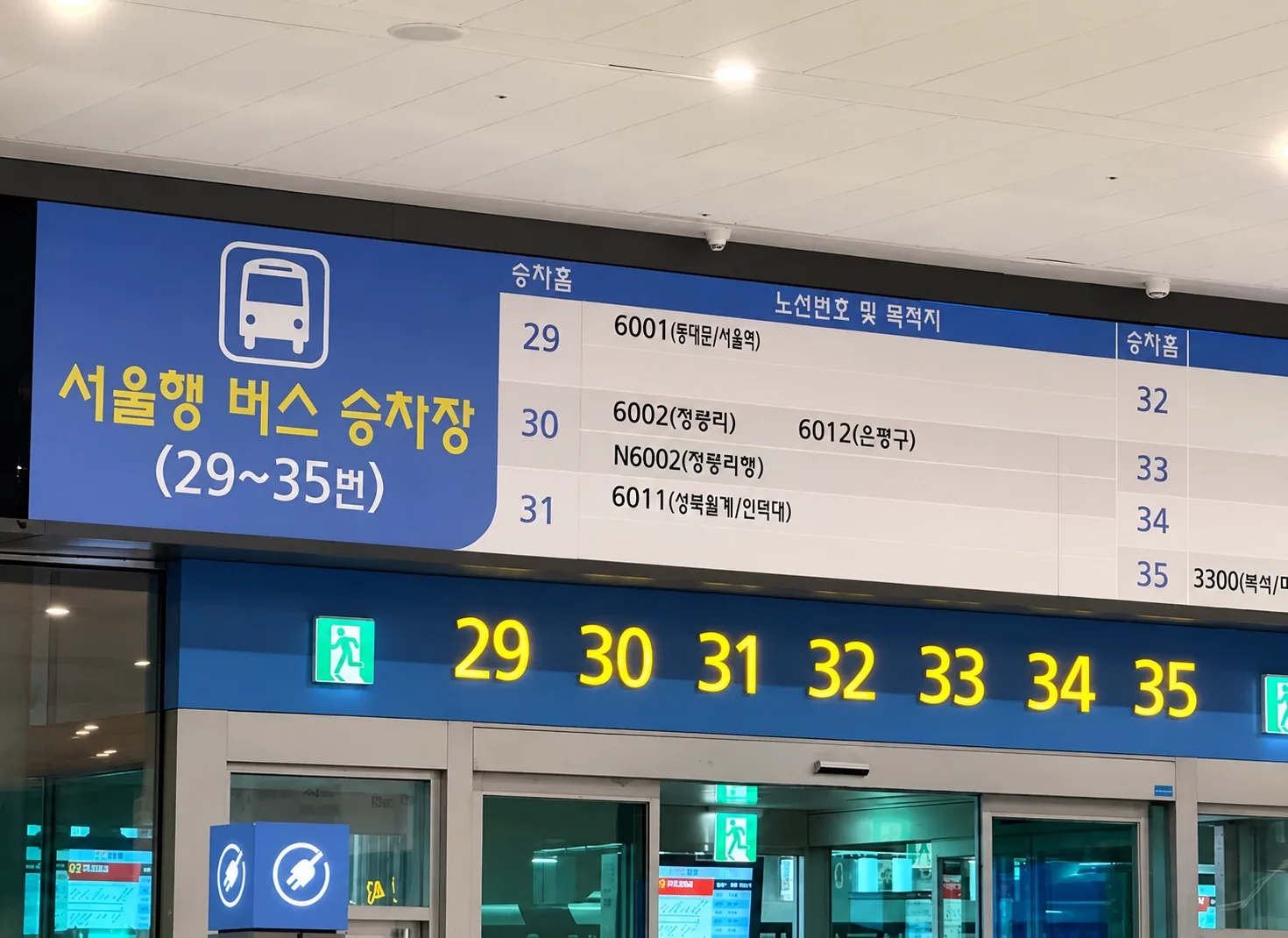
At Terminal 2, follow the airport bus signs to the B1 Transportation Center. Confirm the current ticket counter, route and boarding bay on the live display or with airport staff. Do not depend on an old screenshot or a saved bay number.
Four checks before boarding
- Confirm your destination
- Check the bus type
- Find the operator
- Confirm the boarding bay
A route’s availability, advance-purchase requirement and boarding method may differ by operator. Confirm the live details for the specific service rather than applying one company’s instructions to every bus at T2.
Payment and ticket cautions
- Ticket methods vary: counter sales, ticket machines, online reservations and pay-on-boarding arrangements are not universal.
- Card acceptance varies: do not assume every foreign card or transit card works for every operator. Read the payment screen or ask before boarding.
- Prepare a backup: carry another payment card and a practical amount of Korean won. See the Korea payments guide for arrival-day planning.
- Do not copy an old fare: verify the current fare on the airport or operator page when you select the route.
- Keep the ticket: retain it until you leave the bus, together with any luggage tag.
Chapter 4
Luggage, Children, Late Arrival and Problems
Plan for luggage, children and late arrival by checking the rules of the route you will actually use. Operator-specific limits and a realistic backup plan matter more than assumptions based on another airport bus company.
Luggage
Airport buses can be attractive with large suitcases because many services provide a luggage compartment. Before handing over a bag, confirm that the vehicle is your bus and tell staff the destination stop if asked. Keep valuables, medication, travel documents and electronics with you rather than in the luggage hold.
Keep every claim tag until your bag is returned. Free baggage allowances, maximum size, weight, quantity and treatment of oversized items vary by operator. Airport Limousine Co. guidance is useful only for that company’s routes; check the actual operator for sports equipment, strollers, wheelchairs or unusually large bags.
Children, strollers and groups
Child fares, age definitions, seat rules and stroller handling depend on the service. Check these details with the operator before travel, particularly if a child needs a separate seat. Foldable strollers may still need to go in the luggage compartment, while large or non-folding equipment may require a different plan.
For a family or group, compare the total bus cost and final walk with a suitable taxi or pre-booked vehicle. A bus may remain the easiest option when the stop is beside the hotel. A larger vehicle may be better when the group has more bags than a regular taxi can carry or when the last bus stop is inconvenient.
Late arrival
Do not assume that AREX, ordinary daytime buses and airport facilities all finish at the same time. Check the official late-night page for your arrival terminal and destination area. Seoul night buses and Gyeonggi night buses are listed separately, and a T1 page should not be used as proof of a T2 departure.
Estimate when you will reach the public hall, not when the aircraft lands. Immigration queues, baggage delivery and customs can use the remaining margin. If the night bus does not serve a practical stop, follow signs to the official taxi stand or use a confirmed pre-booked pickup. Never accept an unsolicited ride offer in the terminal.
Eight common problems and what to do
My card was declined
Problem: The counter or machine does not accept the card. What to do now: Ask whether another card, cash or a different official sales point is accepted for that route. Backup option: Use another verified route or the official taxi stand rather than repeatedly trying an unconfirmed payment method.
I bought the wrong ticket
Problem: The destination, direction, terminal or departure is incorrect. What to do now: Return to the official seller before boarding and show the ticket and address. Ask about exchange or refund rules. Backup option: Re-plan with the airport bus search, AREX or an official taxi if the correct bus is no longer practical.
I missed the bus
Problem: The vehicle has departed or boarding has closed. What to do now: Check the official display or counter for the next suitable service and verify that your ticket remains valid. Backup option: Compare the wait with AREX, a different verified bus or an official taxi.
I cannot find the boarding bay
Problem: The saved bay number does not match the current airport signs. What to do now: Check the live display, ticket and terminal signs, then ask airport information staff. Backup option: Return to the official ticket point rather than boarding a bus that merely has a similar number.
I do not know which terminal I am in
Problem: You searched the route for the wrong terminal. What to do now: Check the terminal name on airport signs, your flight information or the official airport map. Backup option: If you must change terminals, use the airport’s designated transfer or shuttle information and allow extra time.
My hotel is far from the bus stop
Problem: The route reaches the district but not a practical final stop. What to do now: Map the walking route and check whether a short official taxi ride from the stop is realistic. Backup option: Choose AREX plus taxi or a direct airport taxi if the combined journey is safer with luggage.
I arrived after the last suitable bus
Problem: No verified late-night route serves a useful stop. What to do now: Check the terminal-specific Seoul and Gyeonggi night-bus pages once more. Backup option: Use the official taxi stand or a confirmed pickup; do not follow unofficial drivers.
I lost my luggage claim tag
Problem: You cannot show the matching tag when leaving the bus. What to do now: Tell the driver or staff immediately and show your ticket, baggage receipt or identifying details. Backup option: Follow the operator’s lost-property process and keep the bus, route, time and stop information.
Chapter 5
Returning to Incheon Airport
Your arrival stop and your return boarding stop may be on different sides of a road or in different places. Confirm the airport-bound stop the day before departure. Save its Korean name, map pin and a street-level image if available, then inspect the walking route with your luggage.
- Search in the airport direction. Confirm that the service is marked for Incheon Airport, not a bus traveling away from it.
- Check T1 and T2 order. Know your airline’s departure terminal and confirm whether the bus serves it directly and in what sequence.
- Verify the stop location. Do not assume the return stop is opposite the arrival stop. Check the operator map and street signs.
- Verify the current timetable. Recheck the official schedule the day before travel, especially for an early flight, weekend or holiday.
- Confirm payment or reservation. The return sales method can differ from the airport purchase process. Follow the operator’s instructions.
- Allow a traffic buffer. Road congestion is less predictable than rail travel. Leave enough margin for the route, terminal stops and airport check-in.
- Prepare a backup. Identify an AREX connection or taxi plan before departure day in case the stop, schedule or capacity does not work.
For an early flight, verify the first airport-bound departure rather than assuming the previous week’s time still applies. From a regional city, confirm the intercity operator, departure terminal and reservation requirements. If the available bus gives little margin for airline check-in, choose a more reliable earlier alternative.
Departure-day Checklist
- Exact Korean destination or airport-bound stop saved on your phone
- Correct bus category, operator, route and direction confirmed
- Terminal 1 or Terminal 2 confirmed for the relevant flight
- Current timetable, ticket method and fare checked through an official source
- Boarding bay or city stop location checked on the day
- Final walk, stairs, slope and road crossings reviewed with luggage in mind
- Child, stroller, wheelchair or oversized-baggage needs confirmed with the operator
- Backup payment method and Korean won available
- Alternative AREX, taxi or transfer plan saved
- For the return trip, airport direction and T1/T2 stop sequence confirmed
Airport Bus FAQ
What is the difference between an airport bus and an airport limousine bus?
“Airport bus” can refer to several services from Incheon Airport. “Airport limousine” is commonly used for comfortable airport-coach services, especially to Seoul, but the name does not mean every route has the same operator or rules. Always check the specific route and company.
How do I find the right bus for my hotel?
Save the hotel’s exact Korean address and find the nearest practical bus stop on a Korean map. Search that stop or area in the official airport bus tool, then compare the final walk, direction, terminal and current operating time.
Are all Incheon Airport buses operated by Airport Limousine Co.?
No. Incheon Airport is served by multiple operators and service categories. Airport Limousine Co. information applies to its routes and should not be treated as a complete list or universal policy for every airport bus.
Where do I buy a bus ticket at Terminal 1?
Follow official bus and ticket signs from the T1 public arrival hall and confirm the current sales point for your route. Because counters, machines and operator methods can change, use the official T1 public bus page or ask airport staff on arrival.
Where do I buy a bus ticket at Terminal 2?
The T2 bus terminal and related facilities are on B1 of the Transportation Center. Follow airport signs and verify the operator’s ticket or reservation method before going to the boarding bay.
Can I use T-money or a foreign credit card?
Payment methods vary by route, seller and operator. Do not assume a transit card or foreign card works everywhere. Check the official route instructions and carry a backup card plus some Korean won.
How much luggage can I take?
Allowances for number, size, weight and special items are operator-specific. Confirm the actual company’s rules before travel and keep the claim tag for any bag placed in the luggage compartment.
What should I do after a late-night arrival?
Check the official late-night page for your terminal and for either Seoul or Gyeonggi, depending on the destination. If no route reaches a practical stop, use the official taxi stand or a confirmed pre-booked pickup.
Are there buses from Incheon Airport to cities outside Seoul?
Yes. Incheon, Gyeonggi and intercity services connect the airport with many destinations. Search the official airport tool by city or terminal and confirm the operator, reservation requirement and current schedule.
How do I take the bus back to Incheon Airport?
Find the airport-bound stop separately from your arrival stop, confirm the direction and T1/T2 service order, and recheck the timetable the day before departure. Allow extra time for road traffic and keep an AREX or taxi backup.
Official Sources
Use the Incheon Airport Bus Search to identify the bus type, route and operator. Use the linked Seoul operator sites, GBIS for Gyeonggi buses, and BusTago for intercity routes and booking options.